Blog
January 19, 2026
Why Denim Density Is Not What We Feel
Words by

When we pick up a pair of jeans, the first instinct is almost always the same: to understand how dense the denim is. This becomes even more pronounced when several garments lie side by side. We start comparing, ranking, and mentally building a scale — “this one feels denser,” “this one lighter,” “this one somewhere in between.” Over time, confidence appears: it seems that an experienced hand can place everything correctly.
In reality, the hand does not measure density. It perceives something else entirely.
Denim density is the weight of the fabric per unit area — a numerical value. Tactile perception is a physiological reaction. There is no direct connection between the two, and this gap is exactly where a systematic error of perception arises.
We Do Not Feel Weight — We Feel Signals That Resemble It
When denim is squeezed between the fingers, what is felt first is thickness — the conditional distance between the fingers. The brain uses this signal to compare one fabric with another and builds a relative scale: where there is more material and where there is less.
This is why the error usually looks like this: one denim is objectively slightly denser but feels almost the same, while another is objectively a bit lighter yet feels denser than expected. The key point is that these are close densities. Sensations do not jump into a different class; they only shift slightly within the same range — and it is this small shift that causes confusion.
Why Open-End Denim Often Feels Denser Than It Is
One of the clearest examples is denim woven from open-end yarn. Such yarns are often bulkier: with the same yarn count, they can have a larger visual and tactile diameter, resulting in a more airy and relief-like structure.
During weaving, this usually creates a higher structural profile. The fabric becomes thicker along the Z-axis and feels fuller when compressed. When compared directly with other garments, the brain interprets this as “denser,” even if the fabric is not the heaviest in the group.
This leads to a common showroom situation: open-end denim can feel “denser than its density” — not by a large margin, but within close values. It does not become a different class of fabric, yet within one range it often rises higher than expected precisely because of its thickness and volume to the touch.
Why Ring-Spun Denim Often Feels Closer to Reality
Denim made from more even and compact yarn (often ring-spun) behaves differently. The yarns lie more stably, the structural profile is usually lower, and the fabric feels more collected and controlled — but also less voluminous.
In comparison, this creates a calibration effect: even when such denim is objectively denser, it may be perceived as “about the same” or only “slightly denser,” because the hand receives fewer volume-based signals. As a result, the perceived density of ring-spun denim often aligns more closely with the actual value.
This is easy to observe in practice. In one comparison, a 14 oz/yd² ring-spun denim felt calmer and thinner than its numbers suggested. Next to it lay a 13.6 oz/yd² open-end denim — and it was the latter that felt denser to the touch. Not because the difference was large, but because open-end provided more thickness between the fingers, while ring-spun provided less.
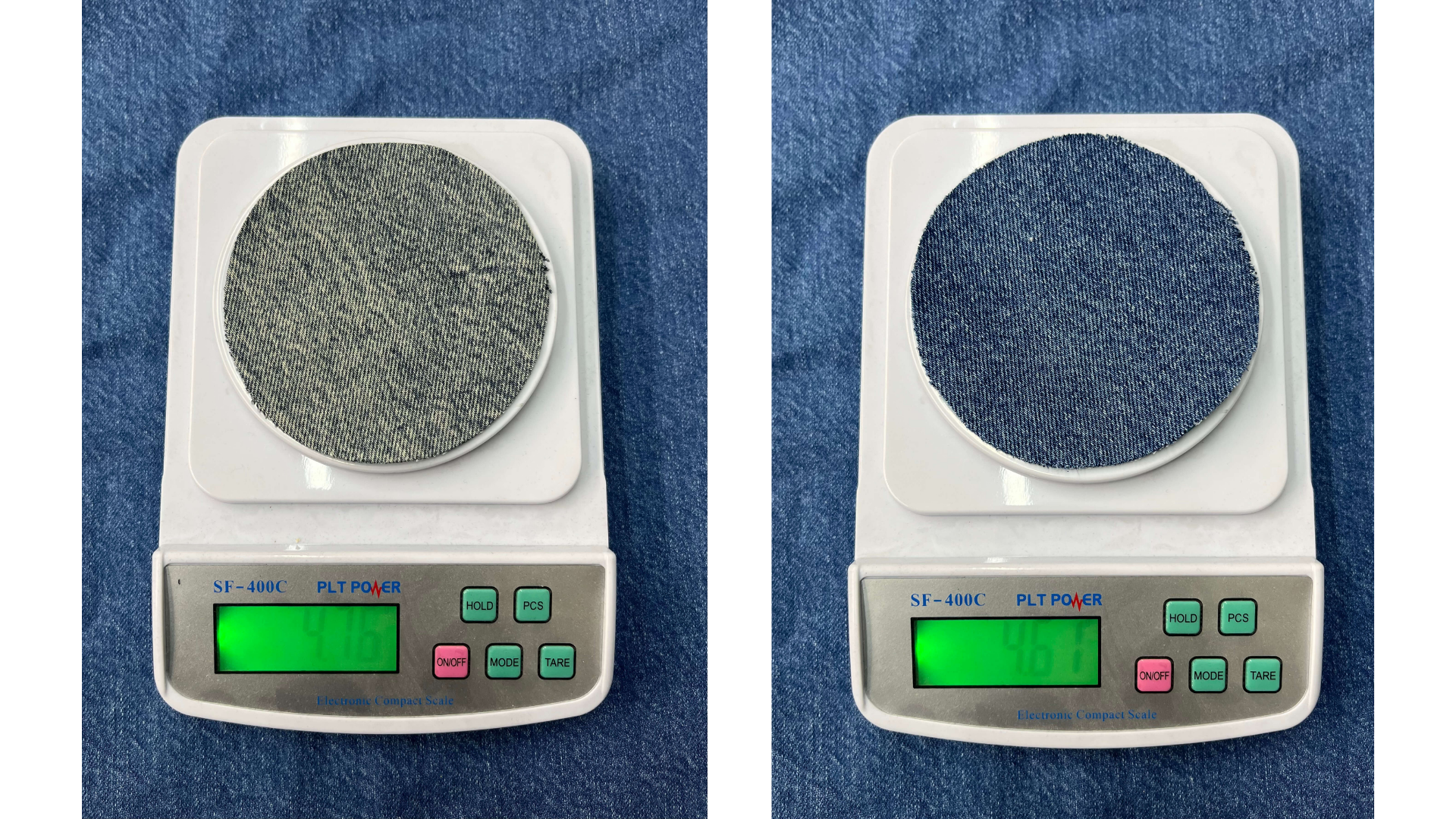
It is important to note that these densities are close; we are not comparing different classes of fabric. This is an example of how, within one range, a less dense denim can feel denser, while a denser one may not be perceived as the densest among samples lying side by side.
This is not about quality or “better versus worse.” It is about fabric construction and the tactile cues it gives to the brain.
The Role of Weave Height
A significant role is played by weave height — how much the yarns work in volume rather than in a low-profile structure. By “flatness,” we do not mean the visual appearance of denim, but how compactly the yarns are arranged within the fabric and how high the weave structure is.
This structural height directly affects the thickness felt between the fingers and, consequently, the position a denim occupies when compared with others.
What Follows From This
Touching denim is an important and useful tool. It helps to understand the character of a fabric, how it behaves, and how it feels. But it is not a method for determining density.
We can feel thickness, volume, firmness, stiffness, or softness. We cannot feel weight per square meter. That is why comparing density “by hand,” especially between different constructions and finishes, is almost always imprecise.
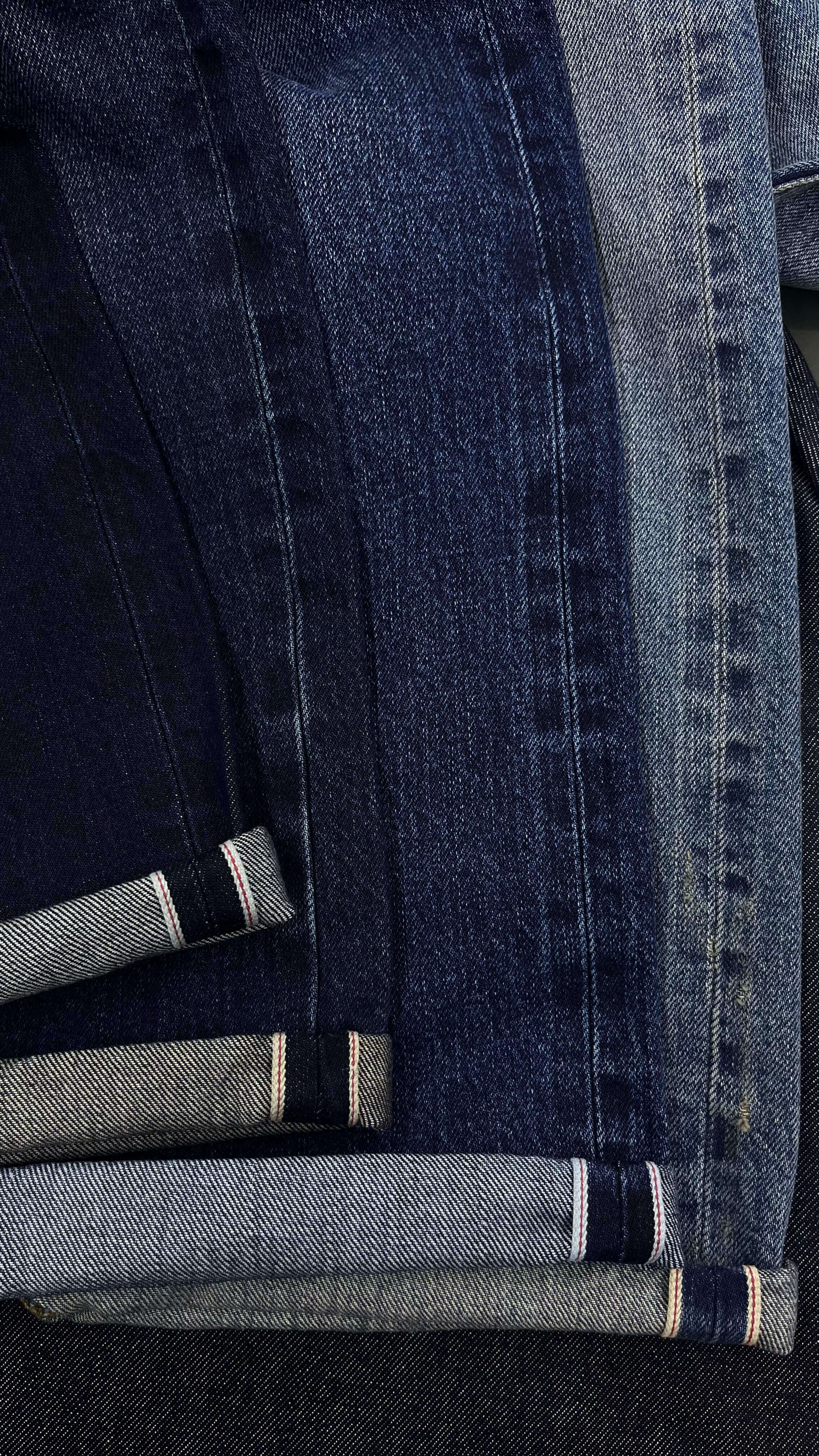
This is precisely why, in our showroom, we show denim in finished garments, across different constructions and treatments — not to confuse, but to demonstrate how strongly tactile perception can differ from numbers.